
Tag: Sustainability

  • The Invisible Bottleneck: What’s actually stalling the Sustainability Revolution?

    The Invisible Bottleneck: What’s actually stalling the Sustainability Revolution?

    We have the technology, the funding, the absolute best talent, and weekly climate disasters reminding us we urgently need to evolve to a more resilient and symbiotic way of living…

    Puzzle pieces illustrating the complexity of systems thinking needed to tackle todays biggest challenges.

    The pieces of the puzzle are all right here in front of us… Yet, when you look at the macro data, it feels like the sustainability movement is momentarily stalling, annoyingly caught up in a restrictive web of bureaucratic compliance and incremental targets instead of igniting the much-needed revolution in how we do business.

    Installing New Software on an Old Operating System

    But why is this happening? What is stalling the flow? Could it be that we are approaching the movement from the wrong angle?  I believe the answer is yes, because we are trying to install new regenerative software onto an old, extractive operating model. And honestly, I’m desperate to do something about it.

    It’s time for everyone to rise…into a new mindset.

    Wild flowers blooming and rising towards the sun illustrating humans rising to a new mindset.

    Over the last 20 years, we have seen the rise of sustainability departments working to put the mechanics in place to operate at net zero, shift to renewable energy, and advance justice and inclusion. 

    Too often, though, these pioneers find themselves drowning in conversations and tasks like doing the carbon math, supply chain audits, understanding regulatory disclosures, and making reports that too few people read.

    Sure, we are making progress, but we can all be candid and admit we need to do a lot more. The drive and responsibility for this unfortunately slow revolution are borne by too few people, and as the future knocks louder, we are being invited to reflect and discern whether there is another, more effective way to mobilize the masses…

    Shifting Focus from Mechanics to Mindset: Where Systemic Change Actually Begins

    What if we started the conversation somewhere entirely different? What if, instead of focusing on mechanics, we focused on the real starting point: People and the mindset driving their every decision? 

    To flourish into the future, we have a beautiful opportunity to update our collective operating system. And I’m not just talking about A.I.! To reshape our linear, waste-spitting economy into something resilient and flourishing, we are being invited to go right back to the beginning. Right to the exact spark where intention is born, and ideas are formed…

    Design Is Intention: What Etymology Reveals About the Root of the Climate Crisis

    A designers work station, with their tools, plans and colour swatches.

    When I was 19, I studied Interdisciplinary Art & Design. I became obsessed with the influence design has on the systems and world we share. Equally obsessed with language and etymology, I learned early that the etymology of the word design is intention: from the Latin designare, meaning “to mark out or intend.” This shaped how I viewed the world from then on.

    If design is the first sign of intention, then that is where the power of influence lies. If we wish (which I do) to change the linear nature of our shared economy, the pivot point lies in how we design things, since everything starts with intention.

    Everything around us, from organizational structures to business models, products, and services, was at one point intentionally designed. The climate crisis and social inequalities we face today are no accident or surprise. They are the logical output of a system designed for extractive and exponential growth.

    After many observations and 20 years, my understanding has evolved to the realization that, to avoid any further disadvantageous logical outcomes, the pivot point lies in becoming aware of what drives our intent and evolving it into a more system-conscious intention to serve a better future.

    Design is intention: If our current industrial output is extraction, it is because the way we planned it intended to make it so.

    The incredible opportunity of our time is that we are being nudged to redesign our intent—to go right back to the beginning, look inward, and relearn how to respond to the whole system rather than just its isolated pieces.

    Many leading organizations are already paving the way. They aren’t just sending teams to carbon accounting seminars; they are actively retraining their product and system designers in circular principles to completely reshape how things are made. But this cannot remain a specialized skill reserved just for the design studio. 

    If we want a true revolution, everyone, from procurement and finance to HR and sales, needs that same upgrade. We need more than just circular products; we need a universal shift in our core mindset to seize the opportunities of the 21st century and win the hearts of the Prosumer (the conscious and proactive consumer driving today’s values-led economy).

    And that requires a completely different kind of training…
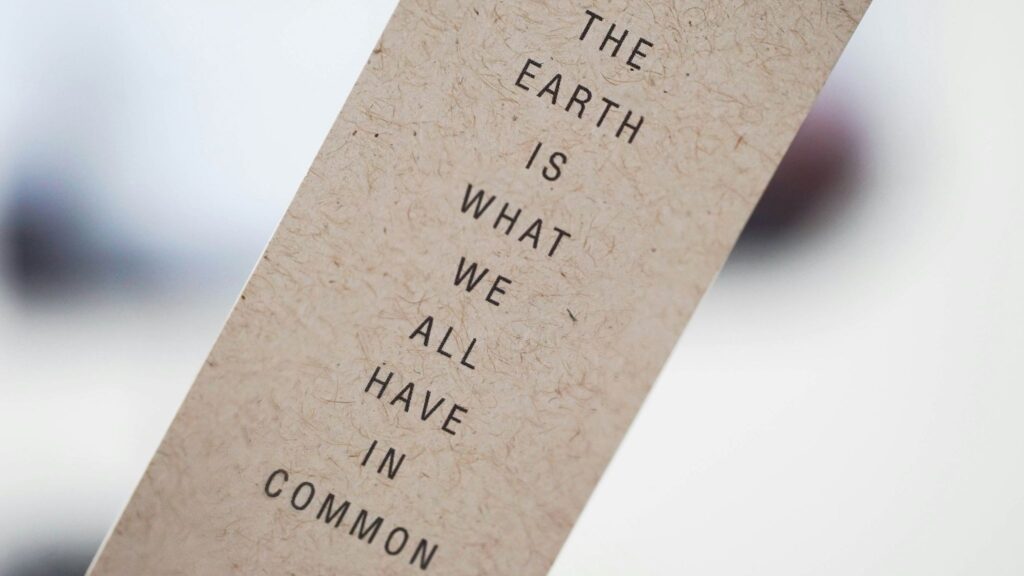
    The picture of a bookmark that says: the earth is what we all have in common.

    Photo by 2H Media on Unsplash

    What Is a Purpose-Positive Mindset and Why Does Every Business Need One?

    Unmeasurable and nebulous, mindset is a tricky thing to form and discuss. Not a destination, or something to be changed overnight, a mindset is formed and influenced by a series of nudges and conversations. It is the beginning and the end of every intention and arguably the greatest opportunity of our time.

    Take a second and think: what mindset is influencing your intentions today?
    How often are you talking with your teams about theirs?

    If tomorrow we wish for all humans to thrive in a safe and healthy environment (within the planetary boundaries), then every intention made today should be influenced by that.

    But who and where are we remembering to integrate that intention into our processes and business plans?

    It cannot be an afterthought, or an add-on; it must be the first thought. It must be the beginning and the end of every intention. A sort of consciousness compass that guides and reminds us to think, plan, and act in a way that enables fulfilled people to live energy-positive and waste-free lives through every action planned, not just some.  It is a muscle to be trained, and that training starts with intention.

    If we are serious about transitioning our economy and organizations from a culture of extraction to one of regeneration and health, the key pivot point where we can create change and really make a difference is in our mindset – by thinking Purpose-Positive to achieve true sustainability.

    Three Mental Filters for Training a Purpose-Positive Mindset

    Light filtering through lenses as a metaphor for mental filters through which we process the world.

    Photo by Jakob Owens on Unsplash

    Where to start and how to train? Right here!

    1. Always Start with Why (The Intentional Filter)

    A Purpose-Positive mindset relentlessly questions Why: Why are we doing this? What is the purpose of this intention, and what effects will it have on the system it depends on?

    The Purpose-Positive Nudge: What systemic value are we creating through this action?

    Starting with Why shifts business language from passive, defensive compliance to active, and intentional intent. When asking why, we engage the heart, head, and hands to ensure our whole being is confident that doing this is the right and valuable thing for now and for the regenerative future we depend on.

    2. Anchor in the Three North Stars (The Operational Filter)

    A major reason teams suffer from “sustainability paralysis” is that the topic feels overwhelmingly complex. A Purpose-Positive mindset cuts through the jargon and general-ness by anchoring every brainstorm and ideation in the 3 guiding pillars that are always seen as whole/one: Fulfilled People, Energy-Positive, and Waste-Free.

    The Purpose-Positive Nudge: Does this intention/decision enable fulfilled people to live energy-positive and waste-free lives?

    Tip: Use the Purpose-Positive wheel to nudge your purpose-positive muscle into action. Sure, at first the questions will seem hard, strange perhaps, but after a couple of times answering the questions, you will swiftly activate that muscle and naturally begin asking these at every step in your decision-making process

    Like learning any new skill, practice makes perfect. By taking the time to train this way of thinking as a team, we can begin to use these three pillars as a shared mental model. There is no absolute right or wrong here; only ongoing conversations to be had and deliberate choices to be made to actively shape a sustainable future.

    Much like training a new muscle, this process can feel uncomfortable, annoying, and demanding. There will be tough sacrifices to make as we realize that if a strategy enables people to be fulfilled but creates unmanageable waste, it is simply not the optimal way forward. But facing that friction together is exactly how we grow—because true systemic change is never a solo endeavor.

    The Collective Power to Redesign: From Extraction to Regeneration
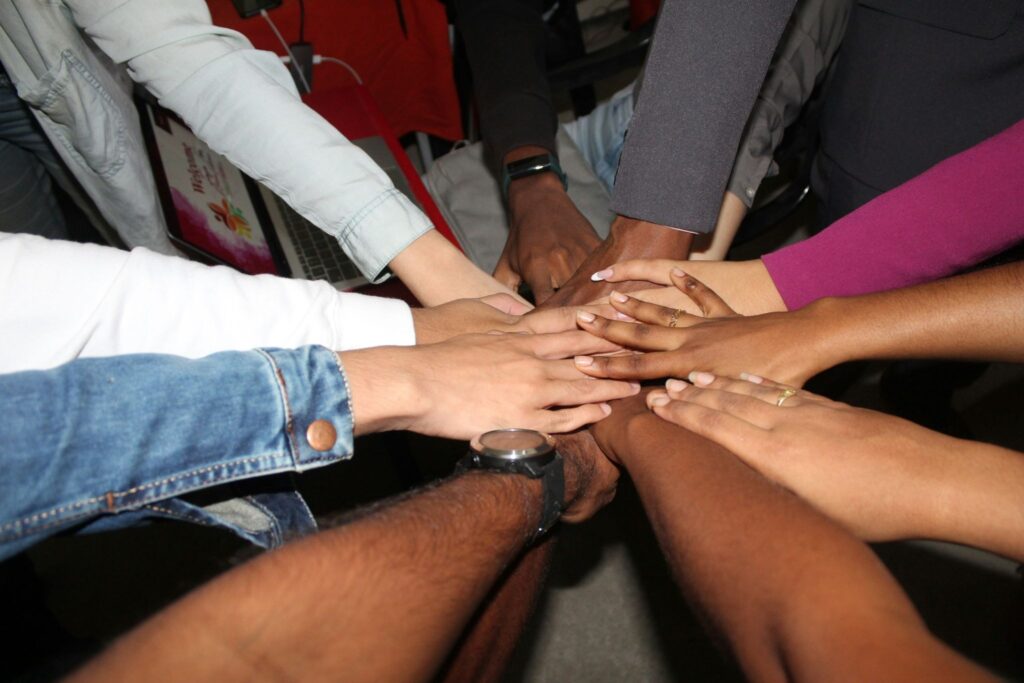
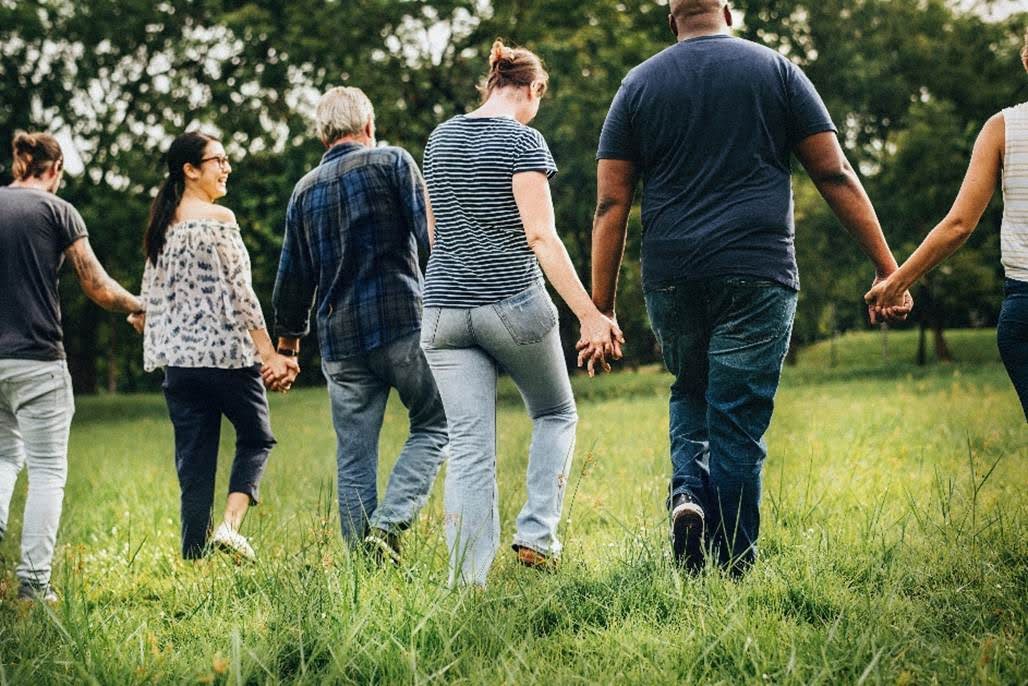
    A group of multicultural hands in a huddle.

    Shifting the mindset of an individual, team, and organization is often slow, invisible, and messy work. It requires patience, psychological safety, and a relentless commitment to a healthy future.

    It will never be perfect, but the power lies in the intent, in the conscious thoughts and small, daily questions that nudge and influence the decisions that make a real impact. And that always starts with the individual. It is a deeply personal choice that begins on the inside and, once made slowly, sets off an internal transformation that changes how you do everything.

    If sustainability is the goal, thinking Purpose-Positive offers an accessible way for everyone, everywhere, to align head, heart, and hands to spark this much-needed revolution of updating how we collectively do business

    As long as old, extractive mindsets continue to guide decision-makers and shapers, the journey to a regenerative future will be long and painful. But if we succeed in scaling a Purpose-Positive mindset to the masses, nothing can stand in the way. As in many times throughout history, the collective power of proactivity can quickly spark miraculous outcomes. 

    When the immense responsibility for change is shifted from that siloed and overwhelmed sustainability department and placed into everyone’s hands, the invisible bottleneck can begin to disperse. In its place, we unlock that collective power that sparks amazing things, inviting and enabling all of us to live fulfilled, energy-positive, and waste-free lives. 

    If we possess the collective capacity to intentionally design a world of extraction, then we most definitely possess the exact same power to design a world of regeneration. The tools are in our hands, but the revolution begins in our minds.
    All it needs now is for you, me, and our entire team to take the step and think Purpose-Positive.
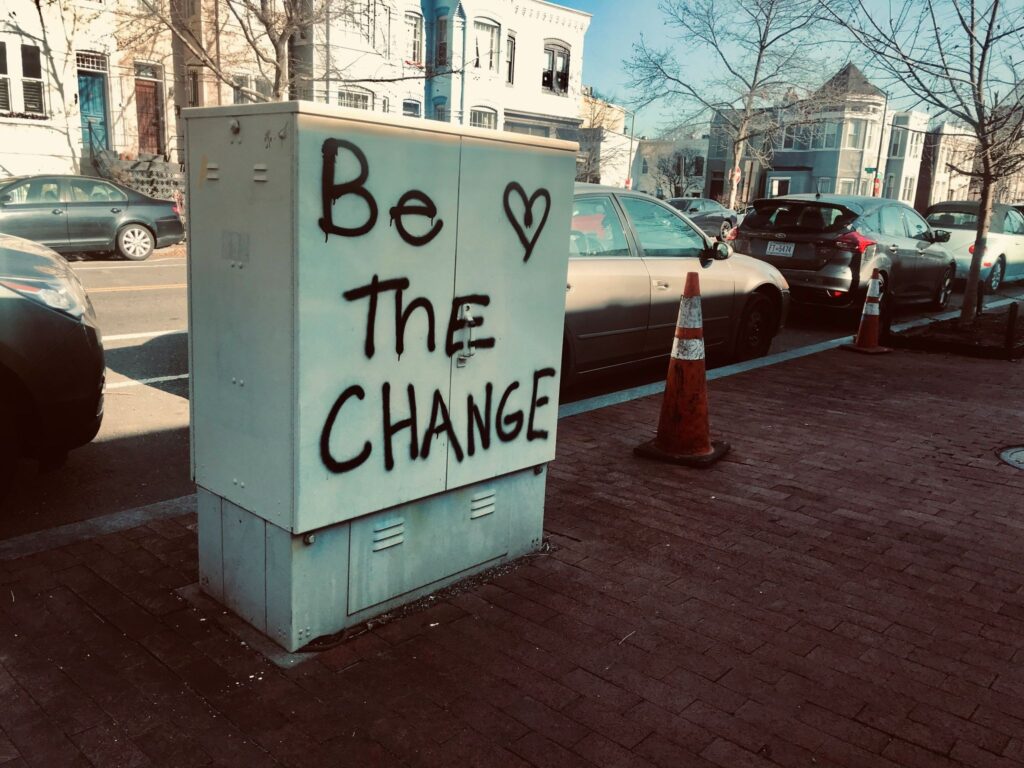
    Street art that says: Be the Change.

    Photo by Maria Thalassinou on Unsplash

    —

    By Stephanie Bartscht
    Founder of EVERiSE

    Sustainability starts within.
    I work with brave leaders and leadership teams who can feel the future knocking and want to answer with clarity, connection, and confidence. Through EVERiSE, I help organisations navigate complexity from the inside out, so sustainability becomes something people can actually live.
  • If Sustainability is the Goal, Purpose-Positive is the Path

    If Sustainability is the Goal, Purpose-Positive is the Path

    If we look at the world around us today, we see cracks. A world breaking under pressure, or a space where potential is bursting through. It is all a matter of perspective. 

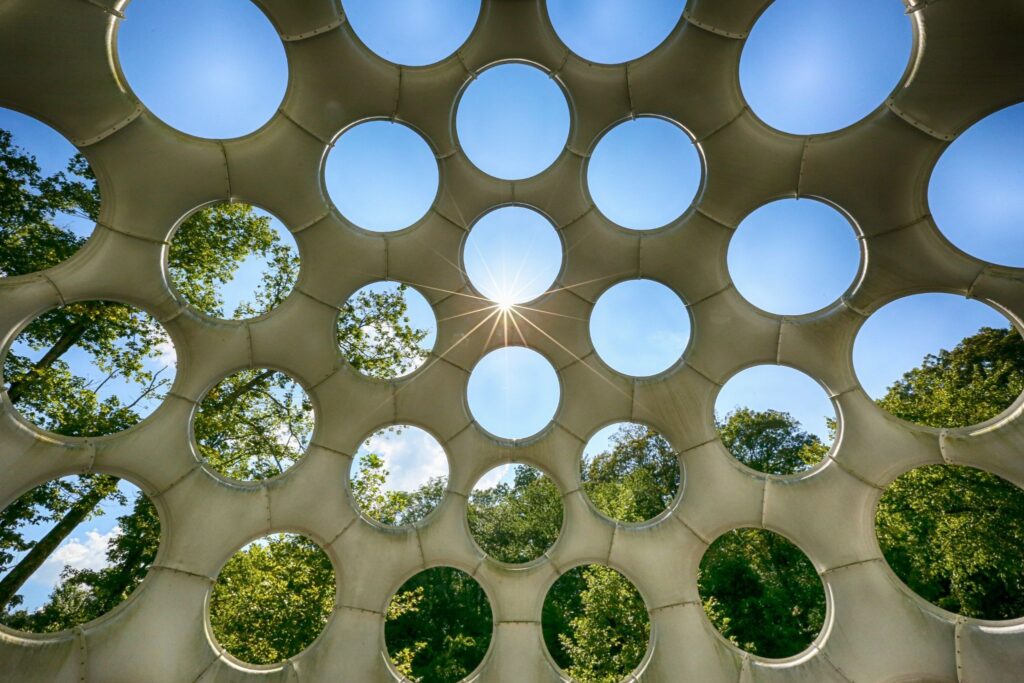
    The view of a closed dome from the inside, with round windows that let the trees, sun and sky in.

    How do you think? What is your mindset?

    In my last article, I shared how today’s business challenges, AI, CO2, human rights, and efficiency, cannot be answered by a single department. These “shared problems” don’t respect siloed boundaries and are exactly why businesses are struggling to keep up.

    To thrive in these wild and wonderful times, every business and individual must move from operating in parts to acting as a whole. 

    But how do we do that?

    Moving Beyond the Boxes: Reclaiming Systems Thinking

    Perhaps the first step is simply remembering what we’ve always known: that we possess a natural superpower for adaptability and interconnectivity.

    Somewhere along the way, we seemed to have forgotten our intuitive sense of how everything touches everything else. In our businesses and organizations, we began trading the big picture for small, isolated boxes, and it’s beginning to cost us everything.

    Moving forward, we are invited to reclaim that lost systems perspective and live beyond the box.  If sustainability is the goal, a Purpose-Positive path guides us to work beyond departments and co-create systems that will flourish into the future.

    The Rise of the Prosumer: A New Soul at Scale

    And we can already see this shift taking shape in the world around us.
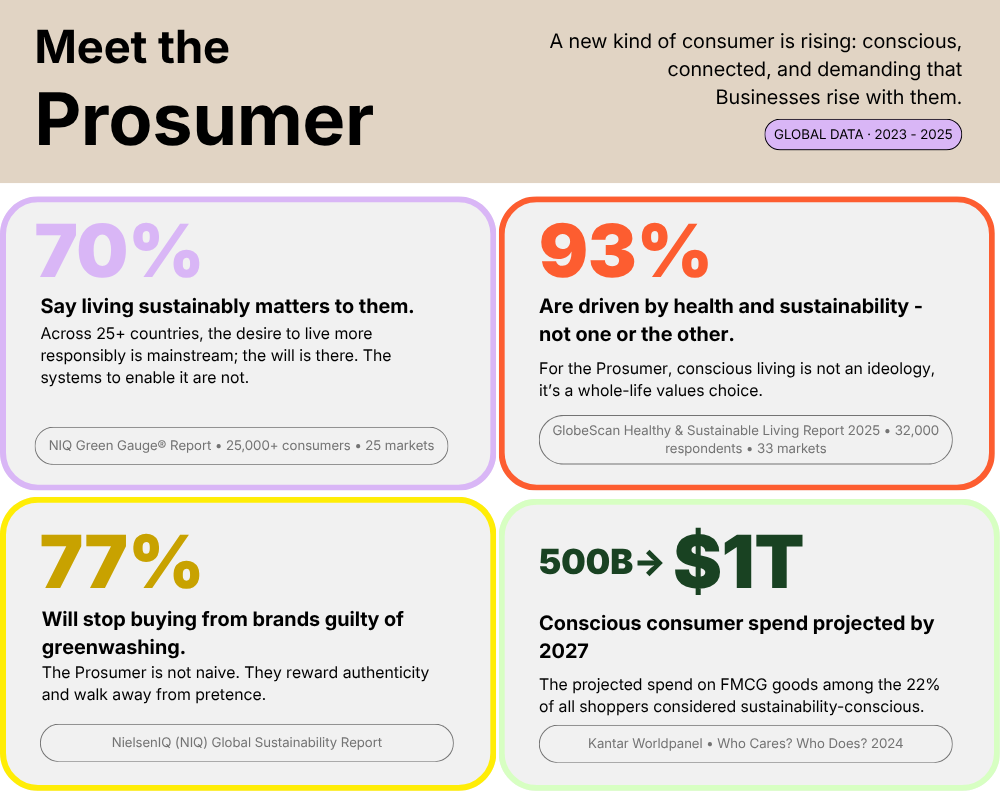
    It is 2026, and a beautiful awakening is happening.  Millions are proactively responding to the cracks in our world’s climate, social, and financial systems. They are choosing green banking, Electric Vehicles, circular products, and so much more.

    At work and at home, the passive consumer has woken up: the Prosumer is here.

    They are seeking soul and purpose. They don’t just want to buy; they want an experience to be part of the solution. Conscious and connected, they span every generation and continent. Aware of the cracks in the “old way,” they are reactivating their own sense of intention. No longer passive participants, they are becoming the architects of our shared future.
    Voting with their wallets, and where they choose to work: the pressure is on for businesses to do the same!

    As existing business models are disrupted by the pressures of change, we find ourselves in a unique window of opportunity. A time for businesses to rise through the cracks by reactivating their purpose to meet the Prosumer, so together they can design a flourishing and symbiotic future.

    Elevate to a Higher Operating System: Think Purpose-Positive

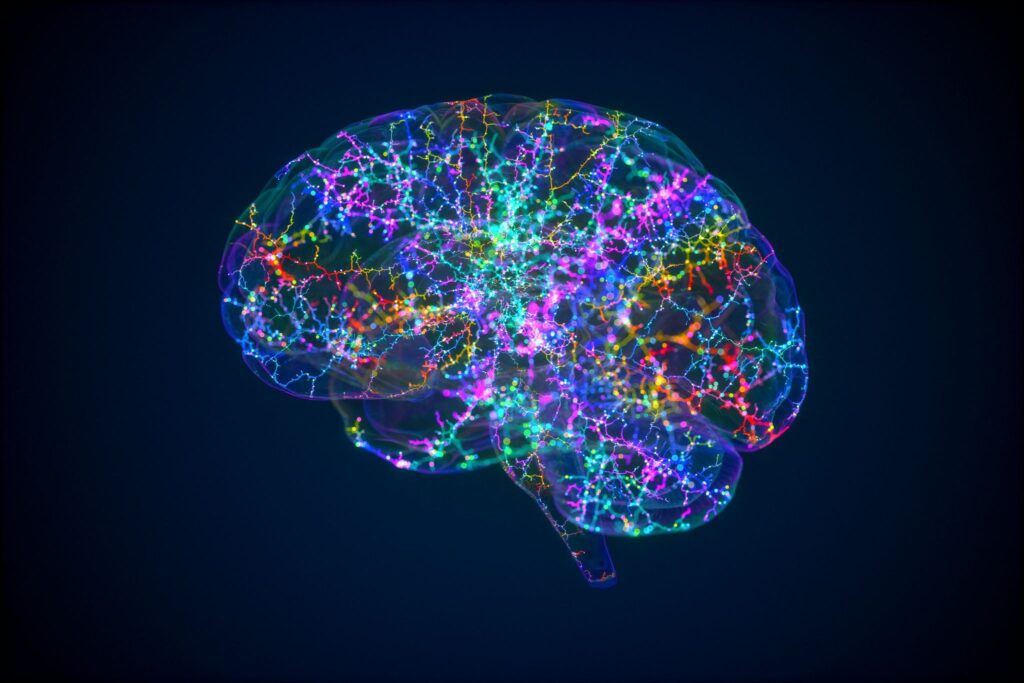
    A brain image with it's connections fully activated.

    To do this, we don’t need another management tool or a new certificate; we need to elevate our Operating System.

    Think of it as an upgrade to your internal software. (You do it on your phone every 3 months!) For the last 150 years, our “business software” has been ever more programmed for silos, extraction, and short-term profit.

    If yesterday we led only with our heads, a Purpose-Positive way of doing things means leading through the Heart (soul), Head (strategy), and Hands (action).

    As systems thinkers, we take the shared world as our starting point and strive to influence the whole web with everything we do. Not just one, but many.

    To think Purpose-Positive is to proactively leverage your purpose to enable fulfilled people to live energy-positive and waste-free, regenerative lives. This ambition is realized through three core pillars that act as one unified pulse:

    • Fulfilled People: Our answer to systemic injustice. It’s about creating environments where human spirits can actually soar.
    • Energy-Positive Living: Our answer to the energy crisis. It’s moving beyond “saving electricity” to becoming a source of renewable, life-giving power.
    • Waste-Free & Regenerative Systems: Our answer to a linear world. It’s the shift from “taking and throwing” to a symbiotic, circular dance with the planet.

    Training the Muscle: The Power of the Purpose Nudge

    People Exercising.

Photo by Sven Mieke on Unsplash

    Being Purpose-Positive is not a job for one person or a single department; it is a mindset to be nurtured, nudged, and practiced by everyone.

    The beauty of this approach is that there is no “master checklist”.
    Instead, there are a series of nudges to spark anyone’s imagination and integrate Purpose-Positive thinking into every aspect of work and life.

    This is where the real power lies: in the individual.
    A Purpose-Positive way of doing things recognizes that the individual holds the power.
    If sustainability is the sum of a million tiny, daily decisions, then a Purpose-Positive mindset is what activates each individual to make them. No “external expert” is needed to tell you what to do, and this is not a management tool or a certification.

    The Purpose-Positive way of thinking empowers every person to leverage their own expertise to enable fulfilled people to live energy-positive, waste-free, and regenerative lives. 

    And it all starts with a nudge. 

    • Justice: How can you enable greater prosperity and equity through our work?
    • Connection: How can you enable your teams to work more as a connected network?
    • Resources: What energy and materials fuel you? Are they bio-based and renewable?
    • Lifecycle: How can we enable greater impact and lifecycle planning for our products?

    Explore more nudges by spinning the Purpose-Positive Wheel here.

    Start in the Planning: The Birthplace of Impact

    A group of people planting a strawberry plant, you see by their hands that they are three generations planting together.

    If we want a different output, we have to change the input.

    Too often is sustainability an afterthought, and when a project is finished, one remembers to ask….“Is this sustainable?” By then, it’s usually too late. The materials are bought, the logistics are set, and the waste is already embedded into the design.

    A Purpose-Positive mindset is most powerful when used to make plans, choices, and decisions. It belongs in that moment when teams come together to provide vision and structure, deciding not just what you are going to do, but why you are doing it and who it truly serves.

    When you bring this mindset into the room before a single Euro is spent, you transform the planning process from a chore into a creative act of designing the future.

    A powerful strategic advantage of this approach is the seamless integration of reporting. Because your metrics and ambitions are integrated into your core purpose and planning from the start, reporting becomes quick, easy, and authentic, rather than a prolonged headache and desperate scramble to find data.

    To think Purpose-Positive is to keep your systems-thinking muscle active during this initial phase. This isn’t about adding “green tasks” to a to-do list; it’s about filtering every strategic choice through a new lens of vitality. First comes the purpose. Then comes the positive: how can this enable fulfilled people to live energy-positive and waste-free, regenerative lives?

    To help you keep this muscle trained, use the Purpose Nudge Wheel.
    Keep it close when planning and doing, and stay fit to shape the future!

    Have fun with it!
    It is an honor and a joy to be a proactive architect of the future, to lead from your systems-thinking superpower and leverage your purpose to enable a world that thrives.

    Shaping the 22nd Century: An Invitation to Upgrade

    A call to action. 

Image by Mika Baumeister on unsplash

    No one said it would be easy. With a million variables that can only be understood through testing and failing, change is never simple, and transformation is endless. But the excitement of discovery is what makes thinking Purpose-Positive easier over time, especially as prosumers rise in every corner of the globe. The more of us exercising our system thinking, the more real change becomes.

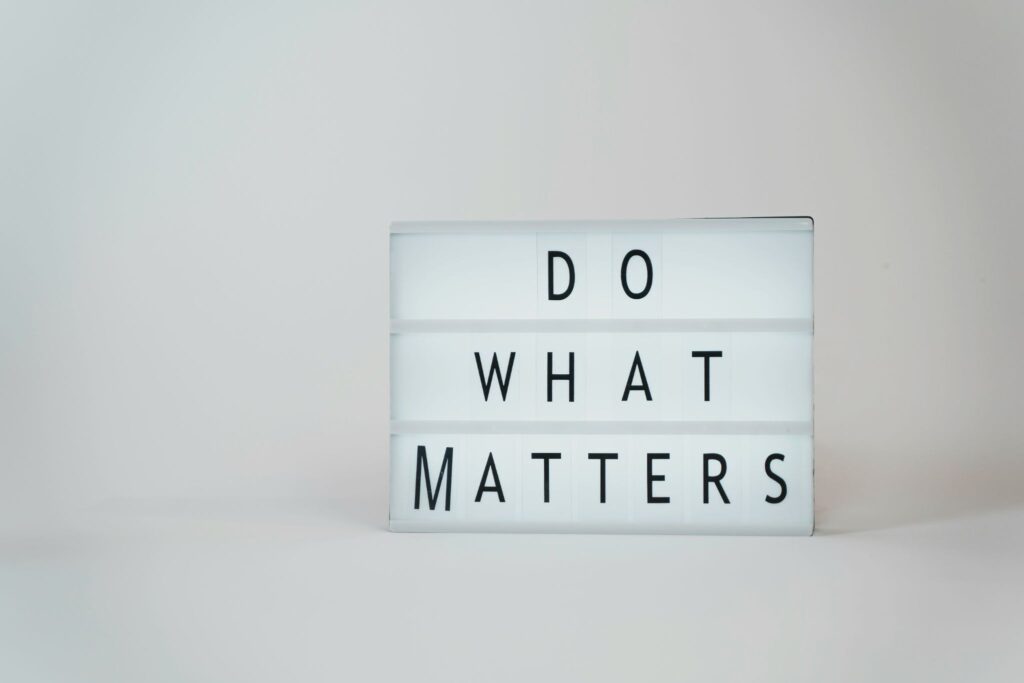
    The time is now: Do what matters!

    The year 2100 is only 74 years away. Most children and many adults alive today will live to experience it. As we move toward the 22nd century, our cracking world is inviting us to renew our foundations, our mindsets, and our systems so that we may all continue to flourish.

    Albert Einstein famously said, 

    “You can’t solve problems with the same thinking that created them.” 

    If you believe things need to change and that tomorrow must be different from today, then this is your invitation to upgrade your operating software.

    Don’t just go to another training.
    Talk with your colleagues about how they see the situation.
    Take time to go inside, reactivate your care-factor, and nurture a new, Purpose-Positive mindset. Gradually elevate your operating model by training your systems-thinking muscle to equip yourself to live a life you love in a world you are proud of.

    Our surroundings are begging us to focus on enabling fulfilled people to live energy-positive, waste-free lives. This begins with reactivating your individual soul, and continues with us all thinking Purpose-Positive together.

    And so to end… I leave you with one simple nudge:
    Are you ready to turn your ‘care-factor’ into the creative force that shapes our shared future? 

    Stay tuned: in the next article, we will dive deeper into the specific structures and methods that can help us think and plan together in a truly Purpose-Positive way.

    Think of this as your regular leadership software update. We are moving beyond the old way of doing things and upgrading to a Purpose-Positive mindset. For more insights on regenerative leadership, training your systems-thinking muscle, and designing a flourishing future, join us on Substack.

    [Upgrade to a Purpose-Positive Mindset here]

    —

    By Stephanie Bartscht
    Founder of EVERiSE

    Sustainability starts within.
    I work with brave leaders and leadership teams who can feel the future knocking and want to answer with clarity, connection, and confidence. Through EVERiSE, I help organisations navigate complexity from the inside out, so sustainability becomes something people can actually live.
  • Why Most Organisations are Falling Behind: The Silo Problem

    Why Most Organisations are Falling Behind: The Silo Problem

    When I say the word system, what do you think of?
    Computers? Ants? The invisible hand that dominates the world?

    When I think of systems, I think of connection. Hyper connectivity. I think of all the living beings on earth, interconnected with an invisible string. I get a warm, fuzzy feeling inside whilst, in parallel, becoming totally overwhelmed by the extent of our collective connectivity.

    Originating from the Greek word: systema, meaning organized whole, a whole compounded of parts. I’ve learnt that people find the word unrelatable and overly academic. I see this as a problem, and I’d like to share why.

    An interconnected web, illustrating a complex natural system.

    The Adaptation Delay

    The world is changing. And always will. This we know. 

    But at the moment, we seem to be seeing more businesses collapse due to our changing world than survive. So what’s happening? Why are we not adapting fast enough to get ahead and master the threats of change? Is it impossible…or is there a way to reignite our adaptive superpower to gain collective confidence in the potential of our bright future?

    Back to the word system. If one of the key changes in our world is that we are more connected than ever, then that also holds the solution to this costly problem.

    We have been designing the parts while ignoring the whole.

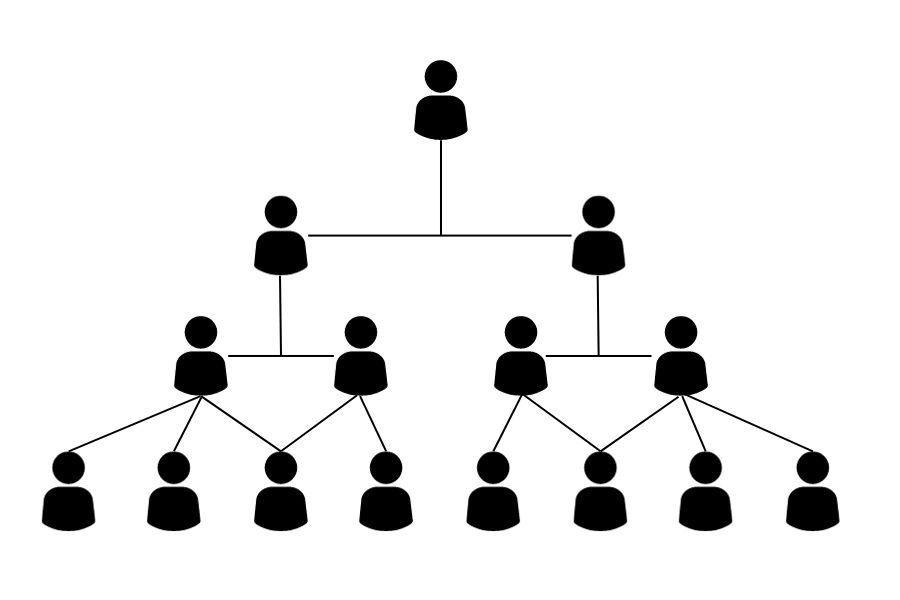
    If we look at the anatomy of most organizations, employees work in departments defined by functions. Siloed and isloted everyone is busy with their part, delivering on their specific metrics. 

    … And slowly this fragmentation is costing us everything.

    As the future knocks, it’s bringing with it topics and themes that don’t seem to belong to just one department or siloe.  

    Where do we do sustainability? … and equality?
    When do we innovate? And who’s responsible for that?

    It’s becoming clear that today’s business challenges do not respect traditional silo and departmental boundaries. Ai, CO2, human rights, waste & efficiency… These are all “shared problems” that no single team can solve in isolation. They require a level of connectedness and relationship that most traditional silos simply aren’t built for.

    These are systemic problems. They belong to the system and fall on everyone to address. The ongoing changes in our shared environment, aka the system, are affecting us all, and to get ahead, they need to become everyone’s business. Literally.

    A standard business organisational chart.

    From Isolated to Connected: Moving Beyond the Era of the Silo

    As challenges are surmounted, it’s becoming clear that the era of the “silo” is delaying us and that the era of the “system” is emerging. Although some departments are already tasked with solving shared problems (innovation, sustainability, ED&I), they are often overwhelmed and understaffed. Whilst siloed functions don’t see the system problems as theirs to solve, there is simply too much for the small group to create progress. The gap between those who deal with change and those who do not is growing, and with it, the cost is rising. 

    As we are urged by our changing world to move from isolated to connected ways of seeing and working, the big shift lies in recognizing that responding to change is a shared task. By coming together with diverse skills, we can overcome anything. 

    For businesses and their organizations to thrive in these wild and wonderful times, the call to action is clear: it is time to bridge the gap and move from operating in isolated parts to perform and deliver as a connected whole.

    Everyone’s Business: Our Shared Future

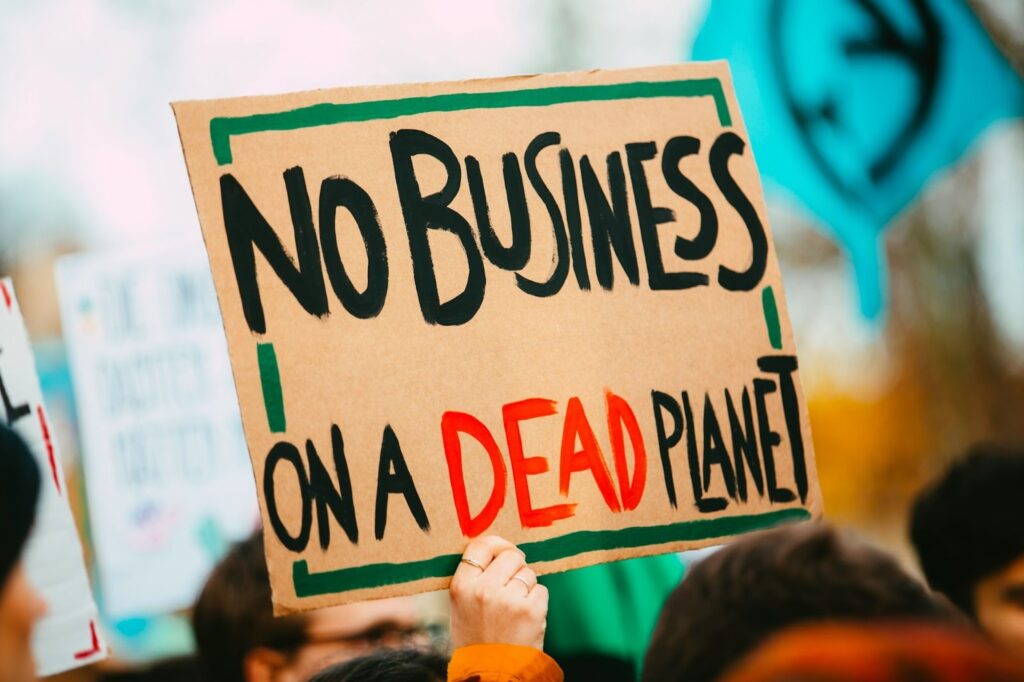
    If we zoom out to the biggest system that connects us all, it is the shared planet we all inhabit. Which, you most probably have noticed, has been changing a lot recently, and much to our own detriment. Until now, in most businesses, dealing with this has been assigned to a budget-free department with little decision-making authority. Not ignoring the valiant and great work done by these professionals, I think we can all agree that the results have not been as effective as we hoped (as explored in the article Sustainability Starts with the Self). The agenda needs to evolve.

    NO BUSINESS ON A DEAD PLANET. Climate change chaos strike demonstration protest: https://unsplash.com/photos/no-business-on-a-dead-planet-sign-z56L143KBvE

    The Mindset Shift

    The topic of sustainability is perhaps the ultimate example of acting in honor of the system. It is a broad umbrella term for anything that could, should, or would be good for the planet and its inhabitants. Unfortunately, many systemic issues have been hidden in the sustainability agenda for too long, and it is costing every business a large “adaptation gap” bill.

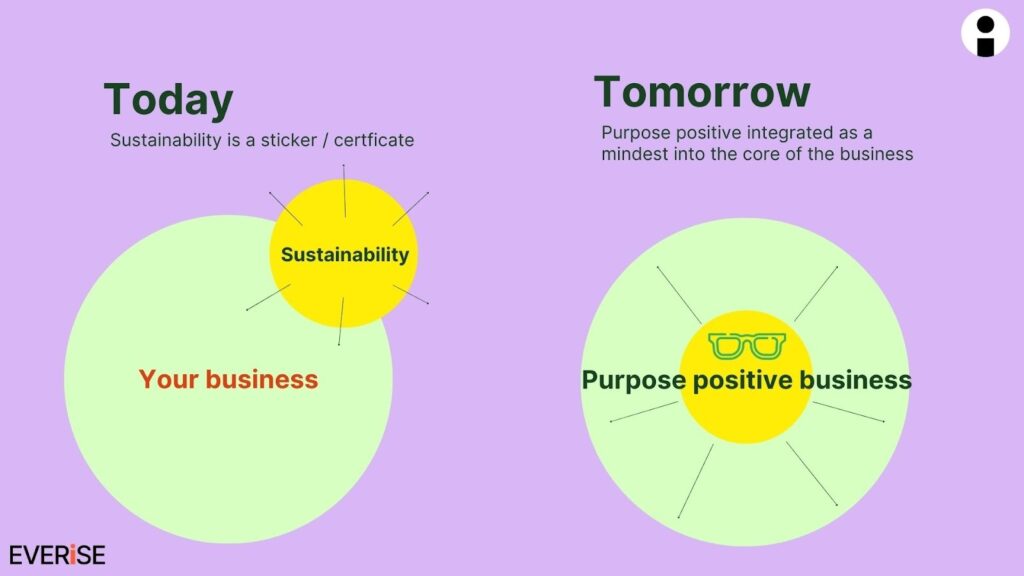
    Often, these ambitions are treated like an add-on “sticker” or a certificate to signal that a business cares, but the reality is that sustainability is never “done.” To serve the endless changes the system presents is an infinite task that begins with a total re-inspection of the entire business ecosystem. Any claim to be dealing with systemic problems without taking a systemic perspective can only ever be a superficial fix.

    Purpose-positive business response to climate change and the silo problem.

    Business as a Vehicle for Purpose Positive Change

    As the planet heats up, we are being forced into the era of the system. Every person and every business is being invited to re-inspect their way of seeing and responding to emergent changes.

    The invitation is to move beyond seeing and solving problems in isolation. Instead, we must navigate the whole together. We need to identify the priorities the system needs to survive and respond to them through cross-functional, cross-departmental, and cross-personal shared ownership. It’s time for a renewal in how we do business. 

    Paul Polman (sustainability pioneer and ex-CEO of Unilever) says it perfectly:

    “The question facing every board and CEO today is not just what your company sells, but what it stands for, and whether your model is built for the world that’s coming or the one that’s already gone”.

    The questions that every business needs to ask itself right now are: What is our purpose, and how is it positively serving the changes of our shared system?
    Crack this, and your future is bright!

    Happy Face sign by Katja Ano

    Just imagine an organization where burnout among “sustainability leads” or “innovation managers” disappears, not because we lowered our targets, but because we finally stopped isolating the responsibility. Imagine a company where every person, from the boardroom to the front line, understands their role in this interconnected web.

    To thrive into the future, we must reignite our adaptive and interconnectivity superpowers.  If every business and organisation could break down its silos and ignite a shared responsibility to act in response to changes affecting the whole, we would cease playing catch-up, paying high costs, and instead become proactive architects of the future.

    What Comes Next?

    If you haven’t realised yet… We are on the verge of a profound evolution. Moving from acting as “isolated parts” to a “connected whole”. This is not just a management strategy; it is the only way to ensure the future remains a place where we can thrive, from business to personal life.

    But seeing the system is only the first step. The real challenge is how we act within it. If the era of the “silo” is closing, what exactly does it mean to replace that “sticker-on-the-wall” sustainability with a living, breathing mindset and strategy that touches every department, every product, and every person?

    In my next article, I will share the framework for that future. We will move beyond the theory of the system and into the tangible, three-fold mindset of the Purpose Positive business: where every action is distinguished by its consideration of enabling Fulfilled People, to live Energy-Positive, and Waste-Free lives.

    —

    By Stephanie Bartscht
    Founder of EVERiSE

    Sustainability starts within.
    I work with brave leaders and leadership teams who can feel the future knocking and want to answer with clarity, connection, and confidence. Through EVERiSE, I help organisations navigate complexity from the inside out — so sustainability becomes something people can actually live.
  • Sustainability Starts in the Relationship Between Us

    Sustainability Starts in the Relationship Between Us

    Nobody lives in isolation.
    As much as some of us may act — or sometimes wish — that we do, it simply isn’t possible. Even if you were to travel to the depths of Costa Rica or deep into the Highlands of Scotland, you would still find yourself surrounded by life. Perhaps not human life, but flora and fauna flourishing in abundance and diversity — life existing through relationship.

    Life is relational by nature.
    And that relationality is inescapable.

    Modern life, as we experience it, often tricks us into thinking we are independent — independent from family, friends, a boss, government, and even each other. But this is not independence; it is disconnection. And as we strive for a better future, I’m certain disconnection is not the best place to start.

    Our future is defined by our relationships — and by how we nurture them.

    Modern Life Promises Independence — But Delivers Disconnection

    As loneliness rises, epic travel to escape becomes more affordable, and fewer people know what food is native or even in season (myself included), our disconnection from our surroundings — and from one another — has become so normalised that we barely notice it. Call it a mass disconnection. I believe this may be one of the greatest barriers to creating the future we say we want — and one we are not talking about enough.

    As the climate clock literally counts down in Times Square, we are aggressively confronted with the message that we must save the planet. In response, we work harder, escape further, and justify more. We are stressed. Our planet is stressed. And every system we rely on — from our nervous systems to power grids, from the internet to businesses — is operating at or beyond capacity.

    The learned response remains the same:
    More.
    Growth.
    Expansion.

    Until it breaks.

    We burn out. Systems fail. Power goes down. Again and again, reality reminds us of the limits — and that the seductive 21st-century illusion of invincibility is not sustainable. We are not independent or invincible; we are deeply connected and profoundly interdependent.

    Modern life doesn’t make us independent — it disconnects us.

    Why “Saving the Planet” Isn’t Enough Anymore

    For decades, the environmental movement has tried to remind us of our dependence on the Earth. While I don’t disagree with this message, I’ve come to believe that the familiar call to “save the planet” is not enough. It doesn’t help enough people truly feel — and live — the interdependence that defines our quality of life.

    So I want to offer a different starting point:

    Our future is defined by our relationships — and by how we nurture them.
    Not in theory.
    In practice.
    In everyday interactions.
    In how we work together, make decisions, and move forward.

    The Workplace Reveals the Depth of Our Disconnection

    The workplace gives it all away.

    In most workplaces, fully capable adults are closely monitored, managed, and assessed, often while working in silos. We increasingly rely on sophisticated tools, data, and artificial intelligence to tell us what to do, how to connect, and how fast to do it.

    And I find myself wondering:
    Were we not previously able to do this in a far more connected way — with struggles, yes, but the kind that arise when humans actually engage? Struggles that, given time and care, can be resolved through honest conversation.

    As technology increasingly leads our lives — from dating to shopping to monitoring — I fear we are forgetting one of our most essential human capacities: the ability to connect. To have honest conversations. To notice how someone is really doing and respond with care. To feel the seasons and recognise the gifts they bring. In the pursuit of efficiency, connection is increasingly outsourced — and with it, our relationships with one another.

    If we don’t practice real connection in our daily work, we can’t expect it to appear when facing collective challenges.

    Connection Feels Inefficient — But It Is the Foundation of Collective Progress

    Guilty as the next, I find this tension especially striking when I think of the ticking climate clock. Is it realistic to expect a connection to our surroundings to suddenly appear when we don’t practice it in our daily lives?

    Take work again.

    If we don’t come together as teams to clarify what we’re doing, why we’re doing it, and how we’ll move forward together, how can we expect collective progress?

    Connection is messy.
    It takes time.
    It can feel inefficient.

    But it is precisely in that struggle that clarity, relationship, trust, and energy are born.

    This is why how we work together matters so deeply.

    The way we relate to one another today — within organisations, communities, and systems — is shaping the future we are moving into. A future led by bots, built on mistrust, avoidance, and fragmentation, will never be sustainable. A future rooted in relationship, connection, human intelligence, and common ground just might be.

    Technology Can Support Us — But It Cannot Do the Living for Us

    Which is why our future demands that we become more human again.

    Because the future is ours.
    We are the ones who have to live here.

    Not AI.
    Not algorithms.
    Not forecasts or frameworks.

    Us — messy, imperfect, emotional, creative humans.

    Sure, technology can support us.
    But it cannot do the living for us.

    An Invitation to Build a Relational Future

    When conscious, connected individuals come together, something powerful happens. They listen. They challenge one another. They collaborate in ways that have shaped humanity’s most meaningful breakthroughs. When left to our natural, relational selves, progress may take longer — but we build the collective capacity to navigate complexity in ways algorithms can only dream of.

    That collective capacity sets the precondition for a healthy future — one built on relationships rather than isolation.

    To live in symbiosis rather than separation.
    Much like when we once ate in season, spoke to strangers in public, and used our human intelligence to solve problems together at work.

    To be clear: this is not a rejection of technology. Technology is a remarkable tool — one that will always be with us. But it should not lead us, nor replace our human intelligence or our innate ability to connect, sense, and discern. It should complement us, not dictate to us.

    Philosopher Glenn Albrecht offers a powerful name for this shift: the Symbiocene — an era shaped by symbiotic, rather than exploitative, relationships between humans and the rest of the biosphere.

    Because our future is defined by our relationships — and by how we nurture them, right here, together.

    —

    By Stephanie Bartscht
    Founder of EVERiSE

    Sustainability starts within.
    I work with brave leaders and leadership teams who can feel the future knocking and want to answer with clarity, connection, and confidence. Through EVERiSE, I help organisations navigate complexity from the inside out — so sustainability becomes something people can actually live.

  • Sustainability Starts With the Self

    Sustainability Starts With the Self


    Why Stressed People Can’t Create a Healthy Future

    If we’re serious about adopting a new perspective on sustainability — about doing things differently — then an honest question follows:

    Where do we start?

    Often, we want to believe it should be the other. But as the logic goes, when you point a finger at someone else, three fingers point back at you (and one at God — but that’s a whole other conversation).

    So here we are.

    Sustainability starts with the self.

    For years, the sustainability movement has focused on saving the world. A beautiful and deeply commendable intention — one I imagine most people reading this align with. And yet, if we’re honest, the results have not been as effective as we hoped.

    Sending money abroad has undoubtedly created a lot of good. It has also, in some cases, created long-term dependency — showing us that good intentions alone are not always sustainable. As “the world” received most of our attention, our own communities were often neglected.

    So, with time, the message shifted: help locally.

    Again, many great things happened — and yet, once more, a familiar pattern emerged.

    Communities benefited.
    But what about the individual?

    Which brings me to the next step.
    And yes, it might sound confronting.

    What if sustainability starts with the self?

    Shocking… or maybe not.

    Enter my favourite question:

    Can disconnected and stressed people create a healthy future?

    Spoiler alert: I don’t think they can.
    Hear me out.

    Every day, millions of people go to work stressed.
    Stressed to perform.
    Stressed because they don’t sleep well.
    Stressed because they don’t actually like what they’re doing.
    Stressed trying to save the world.
    Stressed trying to look the part.

    Collectively, the global workforce (and I’m focusing mainly on office workers here) moves through its days in glass buildings, with overbooked calendars, back-to-back meetings, and the same familiar explanation:

    I have no time. I’m stressed.

    With little space to pause, reflect, or reconnect — almost zombie-like — we continue in the rat race, justifying that we perform best under pressure and don’t like resting. There is immense disconnection, both from ourselves and from one another.

    Have you ever heard the theory: “Shit in, shit out”?

    Crude, yes.
    Accurate, also yes.

    If we are creating the future on overdrive — from a place of anxiety, scarcity, and exhaustion (and don’t forget the reduced fresh air in the glass box) — how can the future ever be better?

    To be clear: good things happen in glass boxes, and stress isn’t always bad.

    But healthy stress (and fresh air) creates healthy action.
    And healthy action has rhythm, recovery, and an end.

    This is only possible when consciousness begins — when an individual takes responsibility for themselves. When there is an internal inspection. An uncomfortable self-confrontation. One that begins with observing and understanding one’s ways, tasks, and contribution.

    All of this can be profoundly beneficial — for the individual, the community, and the world — when it comes from calm, thoughtful reflection, rather than another stressed, last-minute attempt to “quickly fix it”.

    I imagine this may not be news to many. But as we are collectively victims of our own “success”, the real question becomes: how did we get here? Especially given that our intentions were mostly good.

    My theory is this: in the process of our evolution, we became part of systems and worlds so large that we lost ourselves. Literally disconnected — subconsciously, albeit. In a wave of hyper-connectivity, we became so obsessed with doing well for others that we forgot ourselves.

    Forgetting that individuals — including ourselves — are the point of it all.

    In my work with leadership teams and organisations, everything begins with self-awareness.

    How are you perceived?
    How do others experience your behaviour?
    What do you stand for?
    What are you actually trying to achieve?

    When this is clear, real collaboration and performance become possible. Without self-awareness, we don’t truly understand how we contribute to a group — we simply exist within it. And a group without individuals is just noise.

    So I promote this:

    Everything starts with us.
    With our presence.
    With our awareness.
    With our power.

    And to be very clear: this is not about ego.

    It’s about knowing thyself — so you can be of greater value to others.

    When clear, healthy, conscious individuals come together, they can serve a shared purpose in a grounded and effective way. When many do this, a movement emerges. And movements have the power to influence the world.

    So perhaps the same logic follows — with different input:

    Calm in. Calm out.

    When I boarded the sustainability train nearly 20 years ago, I was worried, intense, and deeply stressed. You could have called me a driven rebel — but in truth, I was running on urgency, pressure, and fear, and I was often pretty aggressive in my ways.

    I was young and passionate — but that energy wasn’t effective.

    It burned me out.
    And it taught me the most important lesson of my life.

    That our tone sets the stage.
    And if we intend to create health and calm, we must act accordingly.

    Is this easy? Absolutely not.

    As assignments bring me back into glass boxes and threaten to consume every free space in my agenda, the struggle is real. But that’s the point. It’s an invitation to rise — everyone, everywhere — into the new reality we urgently need.

    One that starts with me, and can lead to a world of healthy, fulfilled beings — thriving in energy-positive and waste-free ways of living.

    Because, cheesy as it may sound, it’s true:

    I am the change.

    My everyday actions.
    The way I enter a room.
    The words I choose.
    What I give my time to.

    I am the beginning of the system.
    My presence sets the tone.
    And only I have the power to change it — to see more of what I want.

    Yes, it hurt to learn this.
    Yes, I had to slow down.

    But not forever.

    Because once grounded, clear, and connected, a new way of thinking becomes possible — and that way of thinking accelerates when it isn’t driven by fear, guilt, or pressure, but by purpose and gusto.

    Confrontational? Yes.
    Easy? No.
    Possible? Absolutely.

    —

    By Stephanie Bartscht
    Founder of EVERiSE

    Sustainability starts within.
    I work with brave leaders and leadership teams who can feel the future knocking and want to answer with clarity, connection, and confidence. Through EVERiSE, I help organisations navigate complexity from the inside out — so sustainability becomes something people can actually live.

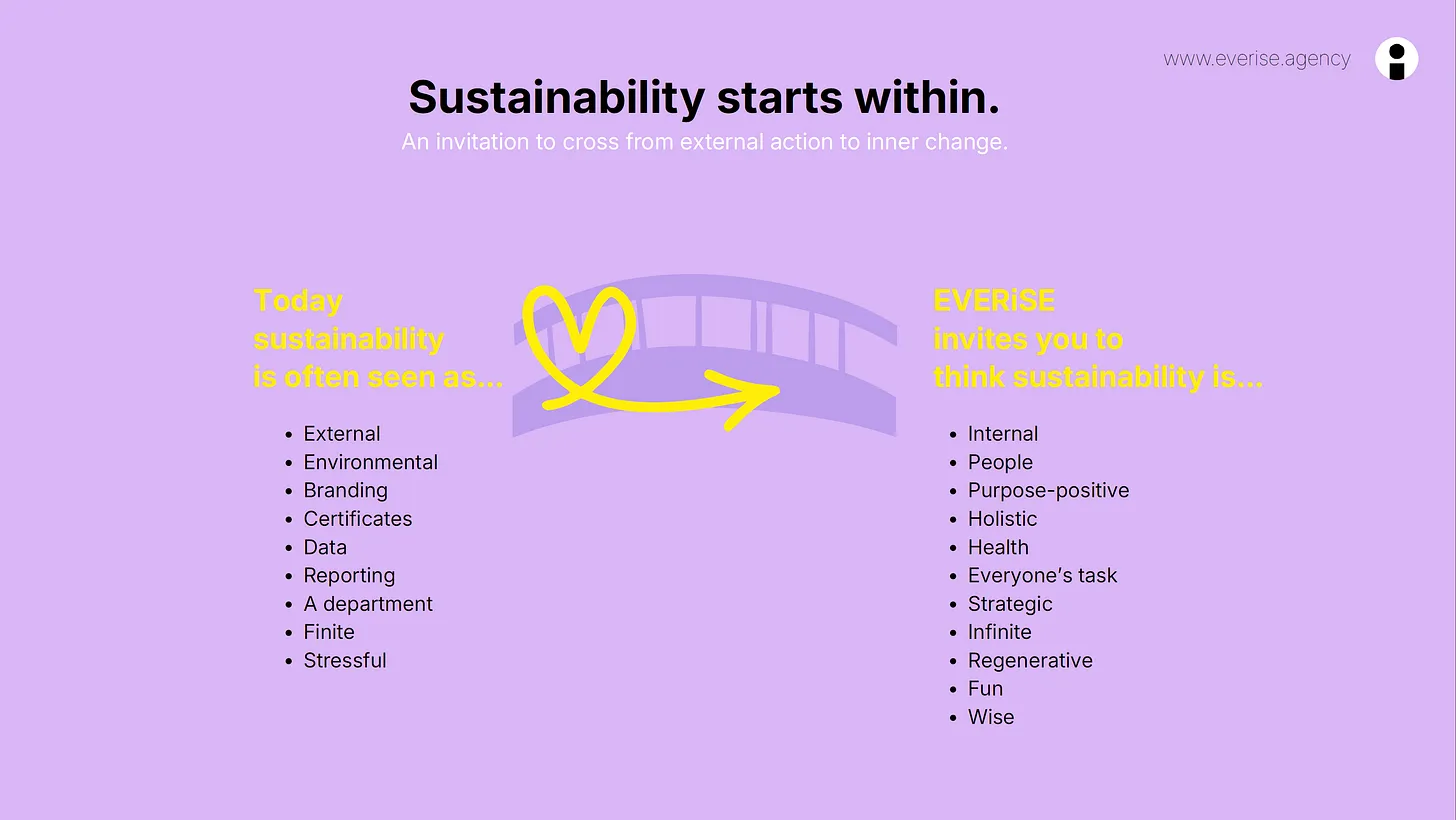
  • Crossing the Bridge: A New Year’s Invitation to See Sustainability Differently

    Crossing the Bridge: A New Year’s Invitation to See Sustainability Differently

    Sustainability Starts Within

    It happens every year.

    A new year begins. An invitation to restart.

    As the night offers a bridge into a new day, a new year, even a new era, the date changes (in the Gregorian calendar), and suddenly everything feels possible again.

    This year, I hope we take inspiration from that bridge — and apply it to how we think about sustainability.

    In 1987, nearly 40 years ago, the Brundtland Report Our Common Future introduced the now-famous definition of sustainable development: meeting the needs of the present without compromising the ability of future generations to meet their own needs.

    A powerful idea. And yet, as we approach four decades since its official birth, I find myself yearning for the same kind of collective reset the New Year offers us every January.

    Because somewhere along the way, sustainability became something else.

    For many, it became primarily environmental: climate change, CO₂, recycling, reporting, and going green. Important topics — absolutely. But incomplete.

    Over my 15 years as a sustainability professional, I’ve often surprised people when I say this:

    I’m not here to save the planet or the polar bears.

    I’m here to serve and inspire humans.

    To help us remember something we once knew instinctively: how to think and act holistically. How to see connections instead of silos. How to understand that sustainability starts within — within ourselves.

    At its core, sustainability is a people topic.

    It’s an invitation to rediscover our human superpower — one many of us lost somewhere along the way — the ability to think in systems rather than in isolation. To see change as everyone’s responsibility, not a department’s. And to begin with ourselves, rather than pointing outward.

    So let me ask you:

    How many people do you know who are stressed, overwhelmed, and exhausted — while working tirelessly to “create change”?
    How many organisations collect certifications and rebrand as green, while very little actually shifts on the inside?

    Too many. Sadly.

    And why is that?

    Because the focus so often lies outside the self and the organisation, instead of within.

    When we start from the belief that sustainability starts within, something changes. Individuals, teams, organisations — even societies — gain access to a different quality of change. One that is rooted, honest, and far more effective.

    And it’s urgently needed.

    Because if we’re honest, too little has changed over the past 40 years, given the scale and seriousness of our societal and environmental challenges.

    Whilst this approach demands self-inspection — a serious look at the self, one’s choices, beliefs, values, and ways of doing things (hence it’s not that popular yet) — never have I been more convinced that now is the time to ignite this resolution… or should I say, revolution?

    As individuals burn out.
    As businesses struggle.
    As institutions crack at the seams.

    We’re being invited to reflect on the future and the bridges we’ll need to get there.

    With the 22nd century just around the corner (74 years — that’s seven generations, and the original Native planning timeframe, a period many of us may witness), we are all being nudged to be honest and admit that what we are doing isn’t working as well as we had hoped. Not because the intentions are wrong, but because the focus has been external rather than internal. We’ve been busy fixing systems, processes, metrics, and images, without tending to the inner foundations that actually fuel change.

    So, here it comes — the quote that triggers many:

    Be the change you want to see in the world.

    It’s a cliché because it’s true. After all, what can you really change, other than yourself?

    Can a tattoo cure acid reflux?
    Can stressed and disconnected people create a healthy planet?

    I think you know my answer. And I’m curious about yours.

    So as the New Year’s night lingers — offering us all a bridge into a new day, a new year, maybe even a new era — my hope is this:

    That we collectively remember our innate wisdom.
    That we dare to start within and remember our superpower to shine bright from within — starting with ourselves, then our groups, our organisations, and together creating a ripple outward to change our societies.

    —

    By Stephanie Bartscht
    Founder of EVERiSE

    Sustainability starts within.
    I work with brave leaders and leadership teams who can feel the future knocking and want to answer with clarity, connection, and confidence. Through EVERiSE, I help organisations navigate complexity from the inside out — so sustainability becomes something people can actually live.
✕